

AI Chatbot vs Live Chat: Which Is Right for Your Business?
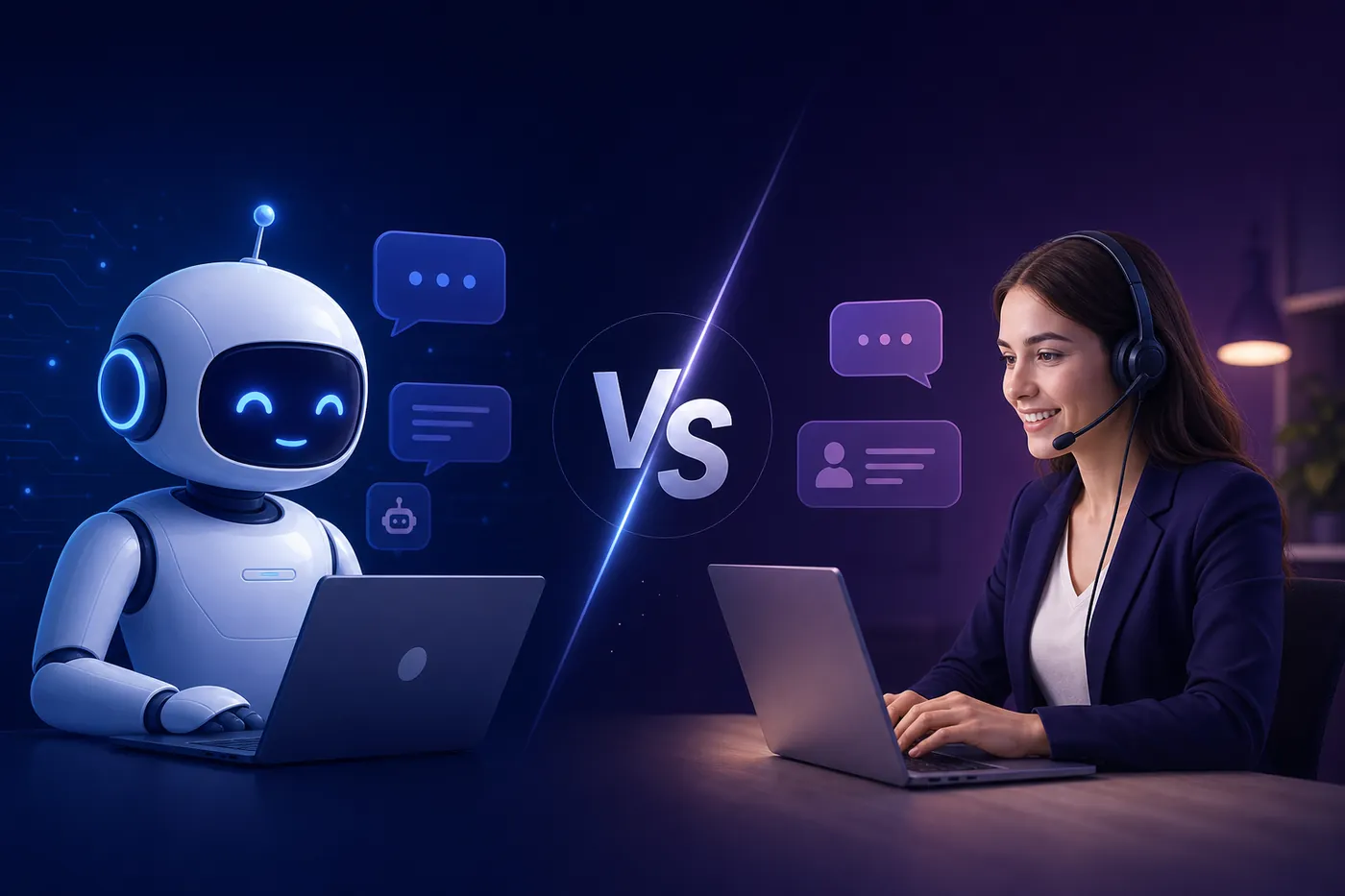
The decision between AI chatbots and traditional live chat with human agents represents one of the most significant choices businesses face when implementing website customer support. Both approaches enable real-time conversations with website visitors, but they differ fundamentally in capabilities, costs, scalability, and appropriate use cases. Making the wrong choice can result in wasted investment, poor customer experiences, and missed opportunities.
This comprehensive comparison examines AI chatbots and live chat across every dimension that matters to businesses. We analyze costs, capabilities, implementation requirements, scalability, customer experience implications, and optimal use cases. By understanding the strengths and limitations of each approach, you can make an informed decision that aligns with your specific business needs, budget, and customer expectations.
Understanding the Fundamental Difference
Before diving into detailed comparison, it is important to understand what distinguishes AI chatbots from live chat at a fundamental level.
Live chat provides an interface for human agents to communicate with website visitors in real-time. When a visitor initiates a chat conversation, they connect with a human customer service representative who types responses manually. The technology simply facilitates the conversation between two people. The quality of support depends entirely on the knowledge, skills, and availability of human agents.
AI chatbots use artificial intelligence to conduct conversations automatically without human involvement. When visitors initiate conversations, they interact with software that understands their questions, accesses relevant information, and generates appropriate responses. Modern AI chatbots use natural language processing to understand intent, machine learning to improve over time, and integration with business systems to access real-time information.
The distinction is not always binary. Many businesses implement hybrid approaches where AI chatbots handle initial interactions and routine inquiries while seamlessly escalating complex issues to human agents through live chat. This combination optimizes both cost efficiency and customer experience.
Cost Comparison
Cost represents one of the most significant factors in the chatbot versus live chat decision. The economics of these approaches differ dramatically.
Live Chat Costs
Live chat requires human agents, creating labor costs that scale with support volume and coverage hours. Agent compensation including salary, benefits, and taxes typically ranges from forty thousand to sixty thousand dollars annually per full-time agent in the United States. Lower-cost regions and outsourcing can reduce this but still represent substantial ongoing expenses.
Software costs for live chat platforms range from twenty to one hundred dollars per agent per month depending on features and vendor. These costs are relatively minor compared to labor expenses.
Training and onboarding for new agents costs four thousand to seven thousand dollars per hire and requires ongoing investment to maintain quality and update product knowledge.
Management and supervision overhead adds approximately one supervisor for every eight to twelve agents, further increasing total costs.
Infrastructure including computers, headsets, and workspace adds fifteen to twenty-five thousand dollars annually per agent for in-office teams, though remote agents reduce some of these costs.
Total cost per agent typically ranges from fifty-five thousand to seventy-five thousand dollars annually when accounting for all expenses. For a small team of three agents providing coverage during business hours, annual costs reach one hundred sixty-five thousand to two hundred twenty-five thousand dollars.
AI Chatbot Costs
AI chatbot platforms typically charge monthly subscription fees based on conversation volume, features, or flat rates. Pricing ranges from one hundred dollars monthly for basic solutions to several thousand dollars for enterprise platforms with advanced capabilities.
Implementation costs include initial setup, integration with business systems, and training the AI on your specific business knowledge. These one-time costs typically range from two thousand to ten thousand dollars depending on complexity.
Ongoing optimization and management requires approximately five to fifteen hours monthly of internal staff time to review conversations, update knowledge, and refine performance.
Total annual costs for AI chatbots typically range from five thousand to thirty thousand dollars depending on conversation volume and platform selection. This represents seventy to ninety-five percent cost reduction compared to equivalent live chat coverage.
Hybrid Approach Costs
Combining AI chatbots with limited human agent availability creates a middle ground. The AI handles the majority of conversations automatically while human agents provide coverage for complex issues and escalations. This typically reduces agent requirements by sixty to eighty percent compared to pure live chat, creating substantial cost savings while maintaining human availability.
Availability and Scalability
How each approach handles coverage hours and volume fluctuations significantly impacts both costs and customer experience.
Live Chat Availability
Providing live chat requires human agents to be actively working. Coverage outside business hours demands additional shifts with associated costs. True twenty-four-seven live chat requires approximately three times the staffing of single-shift coverage, dramatically increasing expenses.
Many businesses compromise by offering live chat only during business hours and displaying offline messages or contact forms outside those times. This creates inconsistent customer experiences and loses opportunities to engage visitors who arrive outside coverage hours.
Scalability with live chat requires hiring and training additional agents. This process takes weeks or months, making it difficult to respond quickly to growth or seasonal spikes. During high-volume periods, customers experience longer wait times or busy signals.
AI Chatbot Availability
AI chatbots operate continuously without breaks, providing genuine twenty-four-seven availability at no additional cost. Coverage hours do not impact pricing, enabling businesses to serve customers regardless of time zones or when they visit your website.
Scalability is essentially infinite. AI chatbots handle one conversation or one thousand simultaneous conversations with identical performance. Seasonal spikes, viral marketing campaigns, or business growth do not require capacity planning or additional investment.
This availability advantage is particularly valuable for businesses with global customers, e-commerce operations, or products that customers research outside traditional business hours.
Response Time and Customer Experience
How quickly customers receive assistance significantly impacts satisfaction and conversion rates.
Live Chat Response Times
Human agents can only handle one conversation at a time, creating queues during busy periods. Average wait times vary based on agent availability and current volume but typically range from thirty seconds to several minutes. During peak times, waits can extend to ten or fifteen minutes.
Once connected, response times depend on how quickly agents can research answers and type responses. Complex questions requiring system lookups or consultation with colleagues create delays.
The quality of responses varies based on agent knowledge, experience, and current workload. Customers may receive different answers to the same questions from different agents, creating inconsistency.
AI Chatbot Response Times
AI chatbots respond instantly to every visitor with no wait queues. Response times typically measure in seconds, creating immediate engagement.
Consistency in response quality is perfect. Every customer receives the same accurate answer to identical questions, eliminating the variation inherent in human responses.
However, AI chatbots may struggle with complex, ambiguous, or unusual questions that fall outside their training. In these situations, response quality may be lower than knowledgeable human agents would provide.
Conversation Quality and Capabilities
The sophistication and helpfulness of conversations differs significantly between approaches.
Live Chat Strengths
Human agents excel at understanding nuance, context, and complex situations. They can read between the lines, pick up on emotional cues, and adapt their approach based on customer needs.
Empathy and emotional intelligence enable human agents to handle sensitive situations, frustrated customers, and complex problems that require judgment and creativity.
Flexibility to handle any question or situation means human agents are not limited to predefined scenarios. They can research unfamiliar topics, consult with colleagues, and find solutions to unique problems.
Relationship building through personalized, warm interactions creates positive brand impressions and customer loyalty.
Live Chat Limitations
Inconsistency in quality based on individual agent capabilities creates variable customer experiences. Your best agent delivers excellent service while your newest agent may struggle.
Human error including typos, incorrect information, or misunderstandings occurs regularly despite training and quality assurance efforts.
Limited availability of specialized knowledge means agents cannot be experts in everything. Complex technical questions or specialized topics may require escalation or research.
AI Chatbot Strengths
Instant access to comprehensive knowledge bases enables AI chatbots to answer detailed questions about products, policies, and procedures without research time.
Perfect consistency ensures every customer receives accurate, complete answers regardless of when they visit or how many times they ask.
Multilingual capabilities allow single AI chatbots to converse fluently in multiple languages, serving diverse customer bases without multilingual staffing.
Data capture and analysis happens automatically for every conversation, providing insights into customer needs, common questions, and improvement opportunities.
AI Chatbot Limitations
Limited understanding of complex, ambiguous, or highly contextual situations can lead to irrelevant responses or failure to grasp what customers actually need.
Lack of genuine empathy and emotional intelligence makes AI chatbots less effective for sensitive situations, complaints, or customers who are frustrated or upset.
Inability to handle truly novel situations outside training data means AI chatbots struggle with unusual requests or questions about very recent changes not yet incorporated into their knowledge.
Optimal Use Cases for Each Approach
Understanding when each approach works best helps you make appropriate choices for your specific situation.
When Live Chat Is the Better Choice
High-value, complex sales processes where customers need consultative guidance benefit from human expertise and relationship building. Enterprise software sales, professional services, and complex B2B products often justify the higher cost of human interaction.
Sensitive customer situations including complaints, disputes, or emotionally charged issues require human empathy and judgment. AI chatbots cannot effectively handle these scenarios.
Highly specialized or technical support where questions require deep expertise and creative problem-solving exceeds current AI capabilities. Expert human agents deliver better outcomes.
Brand positioning emphasizing premium, personalized service may warrant human interaction as a differentiator. Luxury brands and high-touch service models often prioritize human connection.
When AI Chatbots Are the Better Choice
High-volume, repetitive inquiries including order status, shipping information, basic product questions, and policy information are ideal for automation. These represent the majority of support volume for many businesses.
Twenty-four-seven availability requirements without budget for multiple shifts make AI chatbots the only practical solution for small and mid-sized businesses.
Scalability needs where conversation volume fluctuates significantly favor AI chatbots that handle any volume without additional cost.
Lead qualification and initial engagement can be effectively automated, with human agents focusing on qualified prospects who warrant personal attention.
Multilingual support requirements across many languages become cost-prohibitive with human agents but work well with AI chatbots.
When Hybrid Approaches Work Best
Most businesses benefit from combining AI chatbots with human agent availability. The AI handles routine inquiries automatically while escalating complex issues to humans. This optimizes both cost efficiency and customer experience.
Hybrid implementations typically automate sixty to eighty percent of conversations while maintaining human availability for situations that benefit from personal attention. This delivers most of the cost savings of pure AI chatbots while preserving human touch for high-value interactions.
Implementation Considerations
Practical factors influence which approach you can successfully implement.
Live Chat Implementation
Requires hiring and training agents before launch, creating lead time of several weeks to months depending on team size.
Demands ongoing management including scheduling, quality assurance, performance monitoring, and continuous training.
Scales gradually as you hire additional agents, limiting how quickly you can expand coverage or handle growth.
AI Chatbot Implementation
Can launch within days or weeks once you select a platform and complete initial training.
Requires quality knowledge base content and documentation for the AI to access. Businesses with poor or incomplete documentation must invest in creating this foundation.
Demands ongoing optimization based on conversation analysis, but management overhead is significantly lower than human agent teams.
Scales instantly without hiring or capacity planning, enabling rapid growth.
Making Your Decision
Choosing between AI chatbots and live chat requires evaluating your specific circumstances across several dimensions.
Assess your conversation volume and types. High volumes of routine inquiries favor AI chatbots. Lower volumes of complex, high-value conversations may justify live chat.
Evaluate your budget constraints. Limited budgets make AI chatbots the practical choice. Larger budgets enable live chat or hybrid approaches.
Consider your coverage requirements. Twenty-four-seven availability strongly favors AI chatbots unless you have budget for multiple shifts of human agents.
Analyze your customer expectations and brand positioning. Some brands and customer segments strongly prefer human interaction, while others value speed and convenience over human touch.
Review your existing resources including documentation quality, technical capabilities, and management capacity. AI chatbots require good documentation but less ongoing management than human teams.
Conclusion
Neither AI chatbots nor live chat is universally superior. The right choice depends on your specific business needs, customer expectations, budget constraints, and use cases.
For most small and mid-sized businesses, AI chatbots or hybrid approaches deliver the best combination of cost efficiency, scalability, and customer experience. Pure live chat makes sense primarily for businesses with complex, high-value interactions that justify the higher costs.
The trend is clearly toward hybrid models that combine the efficiency of AI automation with the judgment and empathy of human agents. This approach delivers most of the cost savings of pure AI chatbots while maintaining human availability for situations that benefit from personal attention.
As AI technology continues improving, the capabilities gap between AI chatbots and human agents narrows. However, human judgment, creativity, and emotional intelligence remain valuable for complex and sensitive situations. The future of customer support likely involves AI handling the majority of routine interactions while humans focus on high-value, complex, and relationship-building conversations.
Ready to explore the right chat solution for your business? Compare Jaano.ai's AI chatbot and hybrid options to find your perfect fit.
Ready to transform your customer support? Start your free trial with Jaano.ai and experience the future of AI-powered customer service.