

Turn First Impressions into Conversations & Reduce Bounce Rate
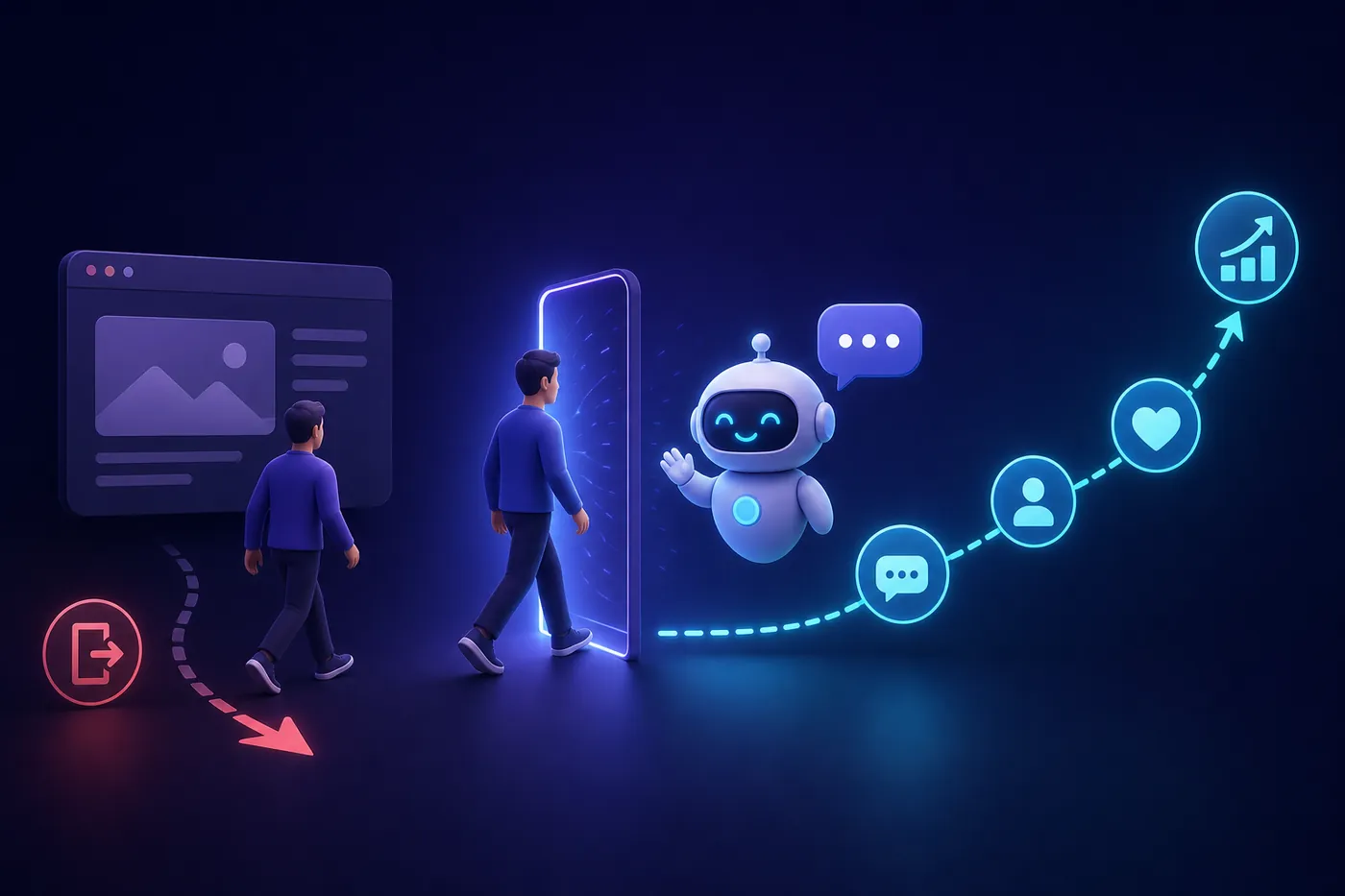
You Could Be Losing Half Your Visitors Before They Show Up. Here’s the Fix
Have you ever landed on your own website and watched the bounce rate climb like a scoreboard you can’t stop? It happens to the best of us. Visitors arrive, glance around, and within seconds, they’re gone. All that effort to get them here, to lose them. But what if you could talk to them the moment they appear instead of hoping they’ll discover something on their own? That’s where conversational tools come in and where Jaano AI Chatbot becomes a real game-changer.
Why Your Bounce Rate Is the Silent Growth-Killer
Your website's bounce rate shows how many visitors arrived and left without clicking or engaging. A high bounce rate isn’t just a number; it means your visitors didn’t find what they expected, or they drifted away because no one reached out to them.
Businesses often focus on getting traffic, but if traffic walks out immediately, you’re essentially paying for lost chances. According to one source, websites using AI chat tools saw bounce rates drop by up to 30%. (Arena)
Another study shows that even more dramatic improvements are possible: going from a 67% bounce rate down to 23% when an engaging chat assistant was used. (Conferbot)
So the bounce rate = your visitor-loss alarm. If you ignore it, you’ll keep losing visitors who might have become leads, clients, or repeat users.
What Happens When Visitors Feel Left Alone
Imagine a person arrives on your site. They’re curious, maybe hopeful. But the page is static. They don’t see a friendly voice, a guiding hand. No one says, “Hey, can I help you?” So they click away. That’s the invisible cost of ignoring engagement.
Without interaction, visitors do just that: they leave. But when there is a prompt, a chat interface, a human-like presence waiting, the visitor is more likely to stay, ask a question, and explore. That immediate interaction changes the visit from “just viewing” to “just conversing”.
In fact, one stat shows that chatbots can answer up to 79% of routine questions. (Adam Connell) And the sooner those answers come, the less likely the visitor is to leave—speed and relevance matter.
When your site fails to greet or help the visitor, you are relying on them to find the doorway, which many won’t. But with a chat tool, you hand them the key.
How Jaano AI Chatbot Steps In The Engager, The Guide, The Retainer
Let’s talk about how Jaano AI Chatbot fits into this picture. It’s not just another little chat widget tucked in a corner. It becomes your visitor’s first interaction, your trusted voice on the page, ready to make a connection.
Firstly, it greets your visitor right away. That welcome message suggests you care about them from the moment they arrive. That small gesture reduces the feeling of “I’m browsing alone”.
Secondly, it asks a short question or offers help: “Are you looking for …?” or “Can I assist you to find the right information?” That question makes the visitor feel seen. Once they respond, they are already engaged.
Thirdly, it directs them sensibly: either to the right page, to download a guide, to a product, to book a time with you, or to chat further. That flow ensures the visitor doesn’t “sit idle” and then leave.
Fourthly, it collects minor data points on what brought them, what they’re looking for, and personalizes the interaction. That alone makes the visitor more likely to stay.
With Jaano AI Chatbot, you’re offering a guided experience from the start, creating a bridge between arrival and action rather than letting visitors wander. That’s how bounce rate comes down.
The Mechanics: Why Chat-Assisted Engagement Works
Let’s break down how and why chat assistance reduces bounce rate and improves visitor engagement.
Immediate connection : The very first seconds matter. A bot message pops in, saying “Hello” or “Welcome”. The visitor feels noticed. That alone increases dwell time.
Curiosity prompt : The chat asks a question or offers help. This nudge turns a passive visitor into an active participant. Once they type something, you have their attention.
Tailored guidance : The bot can analyse their input (or previous behaviour) and offer relevant options. When you give visitors meaningful options, they explore rather than exit.
Answering key questions : Many visitors leave because they can’t find the answer quickly. With a chat tool handling common queries (remember “up to 79% of routine questions” stat), you reduce friction. (Adam Connell)
Reducing confusion : If your visitor is unsure where to go or what to do next, they’ll bounce. The chatbot offers direction, reducing confusion and keeping them on-site.
Continuous improvement : Chatbot analytics show where visitors drop off, where they ask repeats, and where the conversation stops. Some tools track the chat's bounce rate— the % of users who exit after one chat message. (Zoho)
In essence, a chat tool becomes the visitor’s partner. Instead of a solo wander through your site, they have company, direction, and help. That dramatically shifts the experience.
Infographic Table Chatbot Impact on Bounce & Engagement
| Metric | Without Chatbot | With Chatbot* | Goal / Note |
|---|---|---|---|
| Bounce Rate | 50 %-70 % (average) | 20 %-40 % | Some case studies show a drop from 67% to 23%. (Conferbot) |
| Average Session Duration | ~40-60 seconds | 2-4 minutes | More time = more chance to convert |
| Pages per Session | 1.2-2 pages | 3-5 pages | A visitor explores more when engaged |
| Routine Questions Answered Automatically | Low / Manual | Up to ~79% handled by the bot. (Adam Connell) | Free human time supports the visitor |
| Support Cost Reduction | Baseline | ~30 % or more savings. (Adam Connell) | Long-term business benefit |
Real-World Scenario: If You Are in Homeopathy and Healthcare (Yes, This Applies to You)
Since you’re in the healthcare space (offering treatment or advice), the bounce rate challenge is real. A visitor may land on your website looking for answers: “Is this condition treatable?”, “What are my options?”, “What is the cost?” If they don’t get a prompt and feel someone cares, they’ll click away to a competitor.
With Jaano AI Chatbot, you can greet them right away: “Hello! Are you looking for help with a chronic condition, recurring issue, or just browsing?” That friendly tone builds trust. Then you direct them: “Would you like to read our guide about how homeopathic treatment supports recurring conditions or talk with a consultant?”
Because many healthcare questions are personal, the chatbot can direct them to a quick form or schedule a call, collect a little context (without over-promising), and make them feel cared for. That way, they don’t simply leave because they don’t see a clear next step.
When a visitor stays longer, explores your site, maybe downloads material, or asks a question, you’ve changed the dynamic from “visitor who bounces” to “visitor who engages”. Over time, that improves SEO, builds your authority, increases your lead generation, and helps you stand out.
Best Practices to Make Jaano AI Chatbot Really Work for You
You’ve seen the what and why. Now let’s look at how you should make a chat tool deliver absolute reductions in bounce rates and tangible improvements in engagement.
First, set the proper greeting. Don’t be generic. Use a tone that reflects your brand and helps the visitor feel comfortable. A warm “Hi there! How can I assist you today?” works much better than “Hello”.
Second, ask a short question early. For example: “Are you looking for information on chronic conditions or recurring disease treatment?” That small question turns passive browsing into engaged browsing.
Third, have helpful pathways ready. If the visitor says “recurring disease”, then direct them to a page, a form, or a schedule. The visitor should feel that there is a next step. This prevents aimless wandering.
Fourth, make responses quick. One metric in chatbot analytics is the “bounce rate” of the chat tool itself: the percentage of visitors who begin a chat and then leave immediately. (ProProfs Chat) If you see that number high, refine your opening messages and flow.
Fifth, integrate the chatbot with your tracking to monitor session duration, pages per session, and bounce rate before and after implementation. Compare the changes. Use the table above as a reference.
Finally, don’t make claims you cannot back up, especially in healthcare. Use phrasing such as “may support”, “can help”, “our approach focuses on…”, rather than promises of a cure. That maintains trust and professionalism.
Engagement Beyond Bounce Rate: What You Can Win
Reducing bounce rate is not just about moving a percentage point. It’s about deeper engagement and meaningful outcomes. When visitors stay longer, you can do more: share your expertise, offer resources, build trust, and ultimately convert them into consultations or clients.
When a user chats, you can collect small details (with consent) about what they’re seeking. That data helps you tailor your content, refine your services, and build a stronger relationship. A chat tool becomes both a helper and an insight-collector.
You also boost your brand authority. If visitors see that when they click your site, they are met by something tangible, they feel more welcome. That builds perception of caring, which is especially important in healthcare or treatment services.
A stronger engagement means more pages visited, more content consumed, and higher dwell time, all factors that help search engines and referral traffic value your site more. Lower bounce rates, longer sessions, and deeper engagement are all positive signals.
And yes, eventually this helps your business: more leads, more context, stronger trust, better conversion possibilities. The drop in bounce rate is just the visible tip of the iceberg.
Common Missteps and How to Avoid Them
As with any tool, a chatbot can fail if implemented poorly. Let’s look at common mistakes and how to sidestep them.
Mistake one: Chat pops up too aggressively, annoying visitors. If the chat window blocks content or appears immediately with full force, visitors might dismiss it and leave. Solution: Use a gentle greeting timed to page dwell or scroll.
Mistake two: Chat asks too many questions upfront. If you overwhelm a visitor with “What are you looking for? What’s your budget? What’s your time frame?” they may bounce rather than engage. Solution: Keep the initial exchange light and helpful. More profound questions can come later.
Mistake three: The chat doesn’t integrate with your website content. If the bot gives generic “we’ll help you” answers but can’t direct the visitor to real resources or pages, engagement drops. Solution: Build flows that link to specific pages, blog posts, guides, or booking forms.
Mistake four: No monitoring or analytics. If you never track how the chat performs (drop-off points, session length, chat bounce), you won’t know whether it’s working or just irritating your visitors. Solution: Set up metrics, review, and refine. The blog of one tool argues that the chat's bounce rate matters. (Zoho)
Mistake five: Over-promising or misleading statements. In your field (healthcare or treatment), this can undermine your credibility. Use respectful language, manage expectations, and offer value without guaranteeing unrealistic outcomes.
Final Word: Turn Passive Visitors into Conversations
If your website visitors are walking in, taking one look, and walking out, you’re missing opportunities. With Jaano AI Chatbot, you can change the first couple of seconds from a critical moment of silence to a friendly interaction. You can guide them, help them, invite them deeper. That simple shift reduces bounce rate, improves dwell time, and gives you a chance to engage and convert.
Think of the chatbot not as a gadget, but as your first conversation in the room. When that conversation happens, fewer people walk away early. Many stay. Many clicks. Many learn. And some become clients.
The numbers back this up: reductions in bounce rate of 30% or more, longer session durations, routine questions handled by bots, freeing your human team for meaningful work. The practice is proven. (Arena)
So, if you’re ready to stop losing visitors before you even start the dialogue, let Jaano AI Chatbot be your first move. Turn silent visits into meaningful conversations, and watch your bounce rate drop.