

How to Use AI Chatbots for Lead Generation (Complete Guide)
Traditional lead generation methods face increasing challenges in the modern digital landscape. Contact forms create friction that causes abandonment. Gated content annoys visitors who want information without surrendering personal details. Cold outreach generates declining response rates as inboxes overflow with sales messages. Meanwhile, website visitors with genuine interest leave without engaging because they cannot get immediate answers to their questions.
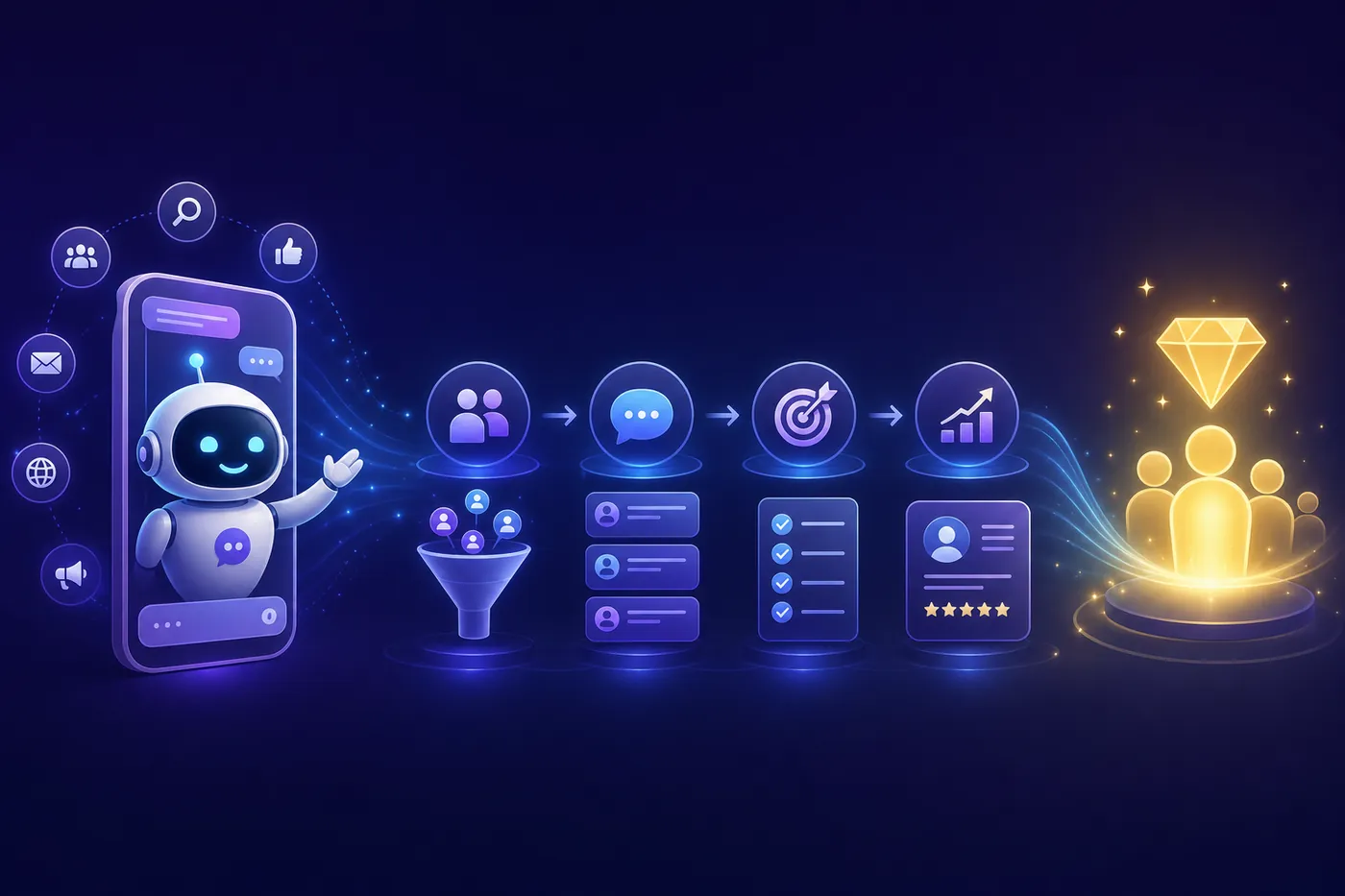
AI chatbots transform lead generation by engaging visitors conversationally, qualifying prospects through natural dialogue, and capturing contact information in exchange for genuine value. Rather than forcing visitors through forms or gates, chatbots provide helpful information while strategically gathering the data sales teams need. This approach increases both the quantity and quality of leads while improving user experience.
This comprehensive guide explores how businesses successfully use AI chatbots for lead generation. We examine qualification strategies, conversation flow design, integration requirements, and proven tactics that increase conversion rates while maintaining positive customer experiences.
Why AI Chatbots Excel at Lead Generation
Understanding the specific advantages AI chatbots provide for lead generation helps frame implementation strategies.
Immediate engagement captures visitor attention during the critical moments when they are actively interested. Traditional forms require visitors to complete fields and submit before receiving any value. Chatbots provide immediate interaction and value, increasing engagement rates.
Conversational qualification feels more natural than forms. Rather than confronting visitors with a long list of fields to complete, chatbots ask questions progressively through dialogue. This gradual approach reduces psychological resistance and increases completion rates.
Contextual relevance based on visitor behavior enables personalized conversations. A chatbot can adapt its approach based on which pages the visitor viewed, how long they have been on the site, and what content they engaged with. This context improves relevance and conversion rates.
Qualification while providing value creates a fair exchange. Visitors receive helpful information, answers to their questions, or useful resources in exchange for providing contact information and answering qualification questions. This value exchange feels more equitable than gated content that demands information before providing anything.
Always-available engagement means no leads are lost due to time zones or business hours. Visitors who arrive at your website at midnight or on weekends can engage immediately rather than waiting for business hours or abandoning entirely.
Data richness beyond basic contact information provides sales teams with valuable context. Chatbot conversations reveal visitor interests, pain points, budget considerations, timeline, and decision-making authority. This intelligence enables more effective sales follow-up.
Designing Effective Lead Generation Conversation Flows
The structure and progression of chatbot conversations significantly impact lead generation success. Effective flows balance information gathering with value delivery.
Opening Engagement
The initial message should immediately communicate value and invite engagement. Rather than generic greetings, use specific value propositions like "I can help you find the right solution for your needs" or "Want to see how we compare to your current provider?"
Offer multiple conversation paths that align with different visitor intents. Options like "Learn about pricing," "See a demo," "Compare solutions," or "Get a custom recommendation" let visitors choose their journey.
Avoid immediately asking for contact information. Provide some value first to establish credibility and demonstrate that the conversation will be worthwhile.
Value Delivery Phase
Provide genuinely helpful information based on visitor interests. Answer questions about your products, explain how your solution works, share relevant case studies, or provide comparison information.
Use this phase to build trust and demonstrate expertise. Visitors should feel they are learning valuable information, not just being sold to.
Strategically introduce qualification questions within the value delivery. Rather than interrogating visitors, weave questions naturally into the conversation. "What's your biggest challenge with [topic]?" or "How many team members would use this?" gather qualification data while maintaining conversational flow.
Progressive Profiling
Ask for information progressively rather than all at once. Start with less sensitive questions about business needs and challenges before requesting personal contact information.
Explain why you are asking for information. "To send you a customized recommendation, I'll need your email address" provides clear justification that increases compliance.
Offer something valuable in exchange for contact information. This might be a detailed guide, personalized recommendation, pricing information, or demo access. The perceived value should justify the information request.
Qualification Questions
Strategic questions identify whether visitors match your ideal customer profile. These typically include company size, industry, current solutions, budget range, decision-making authority, and purchase timeline.
Frame questions conversationally rather than as interrogation. "What size is your team?" feels more natural than "How many employees does your company have?"
Use multiple-choice options when possible to reduce typing burden and standardize responses. This also makes analysis easier.
Closing and Next Steps
Clearly communicate what happens next. "I'll have our team reach out within 24 hours" or "Your custom report will arrive in your inbox shortly" sets expectations.
Offer immediate next steps when appropriate. Scheduling a demo or consultation directly within the chatbot conversation while interest is high increases conversion rates.
Thank visitors for their time and information. Positive closing impressions influence how visitors perceive your brand.
Lead Qualification Strategies
Effective lead qualification through chatbots requires strategic question design and scoring logic.
BANT Framework Adaptation
The traditional BANT framework (Budget, Authority, Need, Timeline) translates well to chatbot conversations when adapted appropriately.
Budget questions can be framed as ranges rather than specific numbers. "What budget range are you considering?" with options like "Under $1,000/month," "$1,000-$5,000/month," or "$5,000+/month" provides useful qualification without feeling invasive.
Authority questions identify decision-making power. "Are you evaluating solutions for yourself or your team?" or "Who else is involved in this decision?" reveal whether you are speaking with a decision-maker or influencer.
Need questions uncover pain points and requirements. "What's your biggest challenge with [problem area]?" or "What features are most important to you?" reveal how well your solution fits their needs.
Timeline questions determine purchase urgency. "When are you looking to implement a solution?" with options like "Immediately," "Within 3 months," "Just researching," helps prioritize follow-up.
Lead Scoring Logic
Assign point values to responses that indicate higher quality leads. Larger companies, higher budgets, decision-making authority, and shorter timelines typically indicate more valuable prospects.
Calculate total scores to categorize leads as hot, warm, or cold. This enables appropriate routing and follow-up strategies.
Combine explicit responses with behavioral signals. Visitors who view pricing pages, spend significant time on your site, or return multiple times demonstrate higher intent regardless of their survey responses.
Disqualification Criteria
Identify clear disqualifiers early to avoid wasting time on poor-fit prospects. If your solution only works for companies above a certain size, asking about company size early prevents lengthy conversations with prospects you cannot serve.
Handle disqualification gracefully by explaining why your solution may not be the best fit and potentially suggesting alternatives. This honest approach builds goodwill even with prospects you cannot serve.
Integration Requirements for Lead Generation
Effective lead generation chatbots require integration with your marketing and sales technology stack.
CRM Integration
Automatically create or update contact records in your CRM when chatbot conversations capture lead information. This ensures sales teams have immediate access to new leads without manual data entry.
Include conversation transcripts and qualification data in CRM records. This context enables more personalized and effective sales follow-up.
Sync behavioral data including pages viewed, content downloaded, and previous interactions. Comprehensive visitor history provides valuable sales intelligence.
Marketing Automation Integration
Trigger automated email sequences based on chatbot interactions. Leads who request specific information can automatically receive relevant nurture campaigns.
Update lead scores and segmentation based on chatbot qualification data. This ensures leads flow into appropriate nurture tracks.
Track chatbot interactions as conversion events in your marketing analytics. This attribution helps you understand the role chatbots play in your overall lead generation.
Calendar Integration
Enable direct appointment scheduling within chatbot conversations. Integrating with calendaring tools like Calendly, HubSpot Meetings, or Google Calendar allows qualified leads to book demos or consultations immediately.
This immediate booking while interest is high significantly increases conversion rates compared to asking leads to schedule separately.
Analytics Integration
Track chatbot performance in your analytics platform. Metrics like engagement rate, conversation completion rate, and lead conversion rate inform optimization efforts.
Create conversion funnels that show where visitors drop off in chatbot conversations. This identifies friction points to address.
Tactics That Increase Lead Generation Conversion Rates
Specific implementation tactics significantly impact how many visitors convert to qualified leads.
Personalization Based on Traffic Source
Adapt chatbot messaging based on how visitors arrived at your website. Visitors from paid ads might see messaging that reinforces the ad's value proposition. Organic search visitors might receive content-focused engagement. Referral traffic could see social proof from the referring source.
This alignment between initial attraction and chatbot messaging improves relevance and conversion rates.
Page-Specific Conversation Starters
Customize opening messages based on the page where conversations begin. Visitors on pricing pages have different needs than those on blog posts or product pages.
Pricing page visitors might see "Questions about our plans? I can help you find the right fit." Blog readers might see "Want to learn more about [topic]? I can recommend relevant resources."
Exit Intent Triggers
Trigger chatbot messages when visitors show exit intent by moving their cursor toward the browser's back button or close button. These timely interventions can capture leads who would otherwise leave.
Exit intent messages should offer compelling value like "Before you go, want a free guide to [relevant topic]?" or "Can I answer any questions before you leave?"
Returning Visitor Recognition
Acknowledge returning visitors and reference their previous activity. "Welcome back! I see you were interested in [topic] last time. Want to continue where we left off?"
This personalization demonstrates attention and can re-engage visitors who did not convert on their first visit.
Social Proof Integration
Include relevant social proof in chatbot conversations. Mentioning that "Over 5,000 companies use our solution" or "We helped [similar company] achieve [result]" builds credibility.
Case studies and testimonials relevant to the visitor's industry or use case increase trust and conversion likelihood.
Limited-Time Offers
Strategic use of urgency can increase conversion rates. "Book a demo this week and receive [bonus]" or "We have limited spots for our implementation program" create motivation to act now rather than later.
Use urgency authentically. False scarcity damages trust and brand reputation.
Measuring Lead Generation Chatbot Performance
Tracking the right metrics enables data-driven optimization and demonstrates ROI.
Engagement Metrics
Conversation start rate measures what percentage of website visitors engage with the chatbot. Typical rates range from five to twenty percent depending on implementation and traffic quality.
Message volume per conversation indicates engagement depth. More messages suggest visitors find the conversation valuable, though very high message counts might indicate confusion.
Conversion Metrics
Lead capture rate measures what percentage of chatbot conversations result in capturing contact information. Target rates typically range from twenty to forty percent.
Qualified lead rate shows what percentage of captured leads meet your qualification criteria. Higher quality is generally more valuable than higher quantity.
Cost per lead compares total chatbot investment to number of leads generated. This enables comparison with other lead generation channels.
Quality Metrics
Lead-to-opportunity conversion rate tracks what percentage of chatbot-generated leads convert to sales opportunities. This measures lead quality and sales follow-up effectiveness.
Lead-to-customer conversion rate provides the ultimate quality metric. High-quality leads progress through your sales funnel to become customers.
Sales cycle length for chatbot-generated leads compared to other sources reveals whether the qualification and context provided by chatbots accelerates sales.
Optimization Metrics
Conversation completion rate shows what percentage of visitors who start conversations complete your desired flow. Drop-off points indicate where to focus optimization efforts.
Question-specific response rates reveal which qualification questions visitors willingly answer versus those that cause abandonment.
A/B test results from different conversation flows, opening messages, or value propositions guide continuous improvement.
Real-World Lead Generation Examples
Examining how businesses successfully use AI chatbots for lead generation provides concrete implementation ideas.
A B2B SaaS company implemented a chatbot that asked visitors about their current solution, team size, and biggest challenges. Based on responses, it provided personalized recommendations and offered to schedule demos. The chatbot generated forty-three percent more qualified leads than their previous contact form while reducing cost per lead by thirty-two percent.
A professional services firm used a chatbot to qualify consulting leads by asking about project scope, budget, and timeline. Qualified leads could immediately schedule consultation calls. The chatbot captured sixty-eight leads monthly compared to twenty-three from their previous form, while providing sales teams with rich context that improved close rates.
An e-commerce platform targeting small businesses deployed a chatbot that asked about current sales volume, platform pain points, and desired features. It provided personalized migration guides and pricing recommendations. The chatbot generated one hundred twelve qualified leads monthly with forty-seven percent converting to trials, compared to thirty-one percent trial conversion from other sources.
A marketing agency used a chatbot to assess potential client needs through questions about current marketing efforts, goals, and challenges. It provided free marketing audits in exchange for contact information. The chatbot generated ninety-six leads monthly with detailed qualification data that enabled highly personalized sales outreach.
Conclusion
AI chatbots represent one of the most effective lead generation tools available to modern businesses. By engaging visitors conversationally, providing genuine value, and strategically gathering qualification information, chatbots generate both more leads and higher-quality leads than traditional forms and gates.
Success requires thoughtful conversation flow design that balances value delivery with information gathering, strategic qualification questions that identify ideal prospects, and integration with your marketing and sales systems to ensure leads flow smoothly into your processes.
The businesses seeing the best results treat chatbot lead generation as an ongoing optimization process, continuously refining conversations based on performance data and user feedback. This iterative approach compounds improvements over time, steadily increasing both lead quantity and quality.
For businesses struggling with lead generation, AI chatbots offer a proven solution that improves results while enhancing rather than degrading user experience. The technology has matured to the point where implementation is straightforward and results are measurable within weeks.
Ready to generate more qualified leads with AI chatbots? See how Jaano.ai helps businesses capture and qualify leads through intelligent conversations.
Ready to transform your customer support? Start your free trial with Jaano.ai and experience the future of AI-powered customer service.